



If you’re planning your first European backpacking trip, I’m a little bit jealous. If you’re lucky, you’ll go on many amazing trips in your lifetime, but you only get one first time.
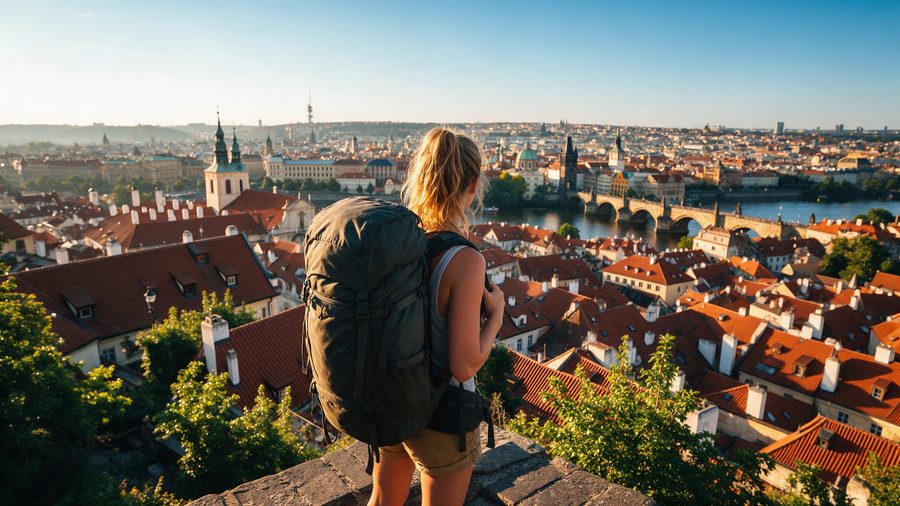
Travel eSIMs you may like:

Even as I watched mice run around the dorm room of an Amsterdam backpackers’ hostel in my very late teens, I knew I was experiencing something special. And for many of us, those early backpacking trips kickstart a love of travel that never leaves.
In other words, backpacking around Europe can be an amazing experience. But you probably already know that. What you might not know is how to make the most of your trip, which common mistakes to avoid, and how to stay safe.
So let’s take a look at everything you need to know before grabbing your rucksack and starting your grand European adventure.
How Long Do You Need?
How long is a piece of string? There’s no single answer to how long you should spend backpacking in Europe. It depends on your appetite for new experiences, your budget, and how long you can afford to be away from home.
As a rough guide, though, think of it like this:
- One week: one country, or two cities that are close together
- Two weeks: 3 to 5 cities, spread across two or three countries
- 3 to 4 weeks: 6 to 8 cities across three to five countries, depending on the distances between them
- 1 to 3 months: you can adopt a more relaxed pace and spend real time in multiple countries
Keep in mind that if you’re flying all the way from Australia, the jet lag alone will eat up your first couple of days. If you can stretch your trip to at least three weeks, the long-haul flights start to feel a lot more worth it.
Maximise Your Time
One of the biggest mistakes I’ve seen backpackers make is zigzagging all over Europe, trying to see everything at once.
Not only will you spend more time and money simply moving from place to place, which is usually the most boring part of the trip, but you’ll also see less of the places you do make it to.
European countries are small compared with Australia, but they’re often not as tiny as you might think. Plus, part of the appeal of Europe is that it packs a lot of cultural diversity into a relatively small area. Different cities in Italy, Spain, and France can feel completely different from one another, so don’t get too hung up on bagging as many countries as possible.
A better idea is to pick a region and explore it properly. Here are a few beginner-friendly routes that flow in a logical line, rather than bouncing back and forth across the map:
Western Europe
- Paris
- Brussels and Bruges
- Amsterdam
- Berlin
Central Europe
- Prague
- Munich
- Salzburg
- Vienna
- Budapest
Italy
- Milan
- Venice
- Florence
- Rome
- Naples
Spain and Portugal
- Lisbon
- Porto
- Madrid
- Seville
- Barcelona
These are just examples, but hopefully you get the idea. Sometimes, you’ll have a better experience staying in just one or two countries rather than trying to see everything at once. If you’re keen to do it by rail, our guide to the best Interrail routes for a first trip to Europe has more ideas.
Plan Transport
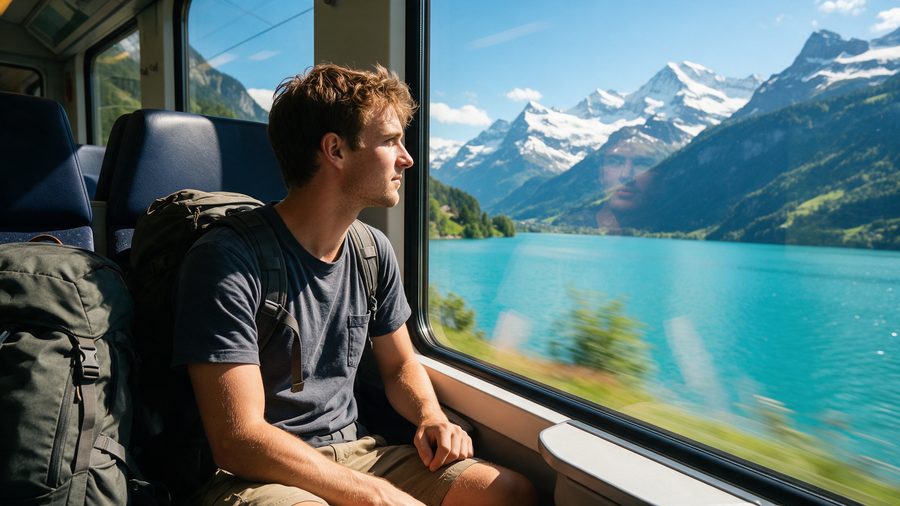
The way you travel will have a big effect on how you spend both your time and your money.
Ultimately, you want to be in the cities and countries themselves, not on the way to them. That’s another reason not to try to do too much, or you’ll spend half your trip in airports and train stations.
Part of the reason Europe is so popular with backpackers is that it has plenty of good options for getting around. For example:
Budget Airlines
Budget airlines like Ryanair, easyJet, and Wizz Air have transformed European travel. They offer low-cost flights all over the continent, and they’re often the cheapest and fastest way to get between two places.
Remember, though, those €20 flight deals aren’t always as good as they seem. You’ll usually pay extra for seat selection and checked bags, and the strict carry-on size limits catch out plenty of backpackers with oversized rucksacks. Budget airlines also have a habit of flying you to airports a long way from the city they claim to serve.
Anyone who’s landed at Paris Beauvais, Barcelona Reus, or Frankfurt Hahn, then had to pay for a long bus ride into the actual city, will know exactly what I’m talking about. Always check where the airport is before you book.
Trains
Trains are more comfortable and scenic than planes. Plus, they usually take you right into the heart of a city, and there’s no need to arrive two hours early for security, which can make them faster door to door than flying on shorter routes.
Train prices vary a lot from one European country to the next. For example, train travel in Switzerland, the UK, and France can get quite expensive, especially if you book at the last minute, while regional trains in Italy, Poland, Romania, and the Balkans can be far cheaper. Booking high-speed trains a few weeks ahead usually gets you the best fares.
An Interrail pass can provide excellent value if you intend to take lots of long-distance train journeys, and since Eurail merged into Interrail, Australians buy the same pass as Europeans. Just remember that many high-speed and overnight trains need a seat reservation on top of the pass. Our guide to whether a rail pass is worth it runs the numbers.
Buses
Buses are often the cheapest way to get from one city to another. Companies like FlixBus and RegioJet run fleets of modern, comfortable buses across much of Europe, usually with Wi-Fi and power outlets on board. However, they tend to be slower than trains, and the cheapest departures often leave at very inconvenient times.
That said, an overnight bus or train can do double duty as transport and accommodation, saving you a night in a hostel. Just don’t expect to arrive feeling particularly fresh.
Know the Entry Rules
This is the bit a lot of first-timers skip, and it can cause real headaches.
Most of mainland Europe is part of the Schengen Area, and Australians can spend up to 90 days in any 180-day period there without a visa. Those 90 days are shared across all the Schengen countries, so hopping from France to Italy to Croatia doesn’t reset the clock. Our guide on how long Australians can stay in Europe without a visa explains how it works.
Europe’s new Entry/Exit System (EES) now records your fingerprints and photo at the Schengen border instead of stamping your passport, and it counts your days automatically, so overstays get flagged straight away. ETIAS, the EU’s upcoming travel authorisation, hasn’t launched yet, but it’s worth keeping an eye on.
If your trip includes London, the UK isn’t in Schengen and has its own system. You’ll need a UK ETA before you fly there.
Saving Money
When you’re backpacking, every dollar counts. In fact, doing it cheaply is, in some ways, part of the quintessential backpacking experience.
Here are some ways to save money on your trip:
Stay in Hostels
Hostels remain one of the cheapest accommodation options in Europe. And they aren’t just for young people, either. Many hostels offer private rooms as well as shared dorms, and lots of them have women-only dorms for extra peace of mind.
Hostels are also a great place to meet other travellers. Some have a genuinely social atmosphere with organised events like walking tours, pub crawls and family dinners, which can be a lifesaver if you’re travelling alone and need some company. Read recent reviews before you book, though. A party hostel and a quiet one can feel like completely different trips.
Cook for Yourself
Lots of hostels have shared kitchens where you can make simple meals. Even skipping one restaurant meal a day adds up to a lot of money, especially over a longer trip.
European supermarkets are also a backpacker’s best friend. Fresh bread, cheese, fruit and a cheap bottle of local wine make a great picnic lunch in a park, and it often feels more like the real Europe than another overpriced café on a tourist square.
Use Free Admission
Lots of European museums offer reduced admission for young people, or free entry on certain days. For example, Italy’s state museums, including big names like the Colosseum and the Uffizi, are free on the first Sunday of every month, and several major Paris museums, like the Musée d’Orsay, do the same.
Just be aware that free days get very busy, and some big-ticket sights have their own rules. The Louvre, for example, is free on the first Friday evening of most months rather than on Sundays. Many of the generous youth discounts only apply to EU residents, so carry your student card and ask anyway, but don’t count on it.
Travel in the Shoulder Season
Summer is the most expensive time to visit Europe, and also the most crowded. Travelling in the shoulder seasons, roughly April to May and September to October, means you can still get good weather, especially in southern Europe, without the crowds and peak-season prices.
Bonus for Aussies: the European shoulder season lines up nicely with our own autumn and spring, so you’re not missing the best of the weather at home either.
Bring Your Network With You
Mobile roaming fees from your Aussie provider can add up quickly, especially when you’re crossing lots of borders. Grab a Europe travel eSIM from ZenSim before you go, and you’ll get data on local networks across 40 countries, the UK included, on a single plan. There are data packs and unlimited options for 5, 15 or 30 days, and you can top up if your trip runs longer, so you don’t have to ration Google Maps while you explore.
Stay Safe
Europe is a very safe place to backpack, but a few precautions go a long way.
Pickpockets are the most common problem, especially in busy tourist areas and on public transport in cities like Barcelona, Rome, Paris and Prague. Keep your phone and wallet in a front pocket or a zipped bag, use a padlock on your hostel locker, and be wary of anyone who gets suspiciously friendly or asks you to sign a petition.
Before you leave Australia, get travel insurance that covers you for the whole trip and any activities you’re planning. It’s also worth subscribing to updates for your destinations on Smartraveller, the Australian government’s travel advice service.
Finally, remember that not everywhere uses the euro. Switzerland, the UK, the Czech Republic, Hungary and Poland all have their own currencies, so a travel card or a bank account with no foreign transaction fees will save you plenty along the way.
Start Your Backpacking Adventure
Proper planning is how you avoid costly mistakes. But at the same time, don’t fall into the trap of thinking that your trip needs to be perfect. Part of the adventure comes from learning as you go.
To avoid disappointment, choose a realistic itinerary, travel light, and leave room for spontaneous experiences. Remember, if you fall in love with Europe, you can always come back and see more of it. Still deciding where to start? Our guide to the best places to visit in Europe on a budget is a good place to begin.
Don’t forget to set up a ZenSim Europe travel eSIM before you fly, so you’re online as soon as you land. Having a reliable local connection makes travel easier, so you can spend more time enjoying yourself and less time hunting for Wi-Fi.
FAQs
Yes. Europe is one of the easiest places in the world to backpack thanks to its excellent transport network, generally safe destinations, and huge range of hostels.
Most backpackers spend somewhere between €2,000 and €4,500 for a month, which is roughly A$3,250 to A$7,300 ($2,300 to $5,100 USD), not counting flights from Australia. Where you go makes a big difference, with Western Europe and Scandinavia at the top end and Central and Eastern Europe at the bottom.
Central and Eastern Europe generally offer the best value. Countries like Poland, Hungary, Romania, Bulgaria, and Albania typically have lower accommodation and food costs than Western Europe.
Solo travel is very common throughout Europe. As with any destination, taking sensible precautions, watching out for pickpockets in busy tourist areas, and staying aware of your surroundings will help you have a safe and enjoyable trip.
Australians can spend up to 90 days in any 180-day period in the Schengen Area without a visa. Time spent in non-Schengen countries like the UK, Ireland, Albania or Turkey doesn't count towards that limit, but those countries have their own rules.
Not necessarily. An Interrail pass can be great value if you're taking lots of long train journeys, but if you're only doing a few trips or mixing in buses and budget flights, buying individual tickets in advance is often cheaper.
Travel eSIMs you may like:
Written by
Travel writer and serial border crosser.
I've visited more than 30 countries so far, which sounds impressive until you see how long my travel wish list still is. When I'm not chasing cheap flights, figuring out eSIMs, or getting lost in places I can't properly pronounce, I'm usually writing about travel, remote work, and how to make both a little easier.
If you've ever searched "Can I work remotely from there?" at 2 a.m., we're probably on the same wavelength.

Get amongst it
Join the community
We will reach out when we launch new products, about our sustainability projects, specials, new innovations or maybe even cool sh*t we think is inbox worthy.


