



I’ve spent a lot of time in Spain over the years, and I still haven’t run out of new places to see. This is a seriously diverse country. Several of its autonomous regions feel like separate countries, with their own languages, food and fierce local pride, and the climate swings from the subtropical Canary Islands to the misty, rain-soaked hills of Asturias.

Travel eSIMs you may like:


Yes, the big two get all the attention. If you’re flying in from Australia, your first stop will almost certainly be Barcelona or Madrid, and I have nothing against either of them. They’re both brilliant. But if that’s all you see, you’re missing most of what makes Spain so addictive.
So here are the places I’d send a friend, plus the practical bits (when to go, how to get around and how long to stay) that make planning a whole lot easier.
The Best Places to Visit in Spain (Outside Barcelona and Madrid)
The list below runs roughly from the Mediterranean coast down through Andalusia, up to the green north and then out to the islands. You won’t fit all twelve into one trip, and you shouldn’t try. Spain rewards slow travel, long lunches and the odd siesta, so pick a region or two that suits your style and give each stop at least a couple of nights. I’ve included the main sights, the food to hunt down and roughly how long it takes to get to each place, so you can start sketching out a route as you read.
Valencia

Valencia is Spain’s great all-rounder. You get Mediterranean beaches, a gorgeous old town and the futuristic City of Arts and Sciences, a cluster of white, spaceship-like buildings by architect Santiago Calatrava that houses a science museum, an opera house and Europe’s largest aquarium. Connecting it all is the Turia Gardens, a park that runs for around 9 km along an old riverbed that was drained after a major flood in 1957. It’s the best place in the city to cycle, jog or just lie in the shade.
Valencia is also the birthplace of paella, and locals take it very personally. The traditional version uses chicken, rabbit and green beans, not seafood, and it’s a lunch dish, not dinner. Head out to the Albufera lagoon just south of the city to eat it where it was invented. If you can, time your visit for Las Fallas in mid-March, when giant satirical sculptures fill the streets for days before being set on fire. Valencia is under two hours from Madrid by high-speed train and about three hours from Barcelona.
Seville
Seville is the capital of Andalusia, and for many people it’s the most Spanish-feeling city in Spain. Orange trees line the streets, horse-drawn carriages clatter past the cathedral, and flamenco spills out of bars in the Triana neighbourhood, where the art form has deep roots.
The headline sights are big. The Real Alcázar is a royal palace that has been in use for centuries, a dazzling mix of Moorish and Christian architecture (Game of Thrones fans will recognise it as the Water Gardens of Dorne). Seville Cathedral is the largest Gothic cathedral in the world, and you can walk up the ramps of its Giralda bell tower for views over the rooftops. Then there’s the Plaza de España, a huge semicircle of tiled alcoves representing each Spanish province.
Plan your timing carefully. Spring is magic, with Semana Santa processions and the Feria de Abril, but July and August regularly pass 40°C. Seville is roughly two and a half hours from Madrid by train.
Granada

Granada is home to the Alhambra, a hilltop palace complex built by the Nasrid dynasty and one of the most beautiful buildings in Europe. The Nasrid Palaces are covered in intricate carved plaster, tilework and calligraphy, and the Generalife gardens next door are full of fountains and cypress trees. Here’s the big tip: tickets for the Nasrid Palaces come with a timed entry slot and sell out weeks in advance in peak season, so book through the official website as soon as your dates are locked in.
Away from the Alhambra, the Albaicín is a tangle of whitewashed lanes on the opposite hill. Walk up to the Mirador de San Nicolás at sunset for the classic view back across to the palace with the Sierra Nevada behind it. Sacromonte, next door, is known for flamenco shows inside cave houses. Granada is also one of the last places in Spain where a free tapa still comes with most drinks, which makes for a very cheap night out.
Córdoba
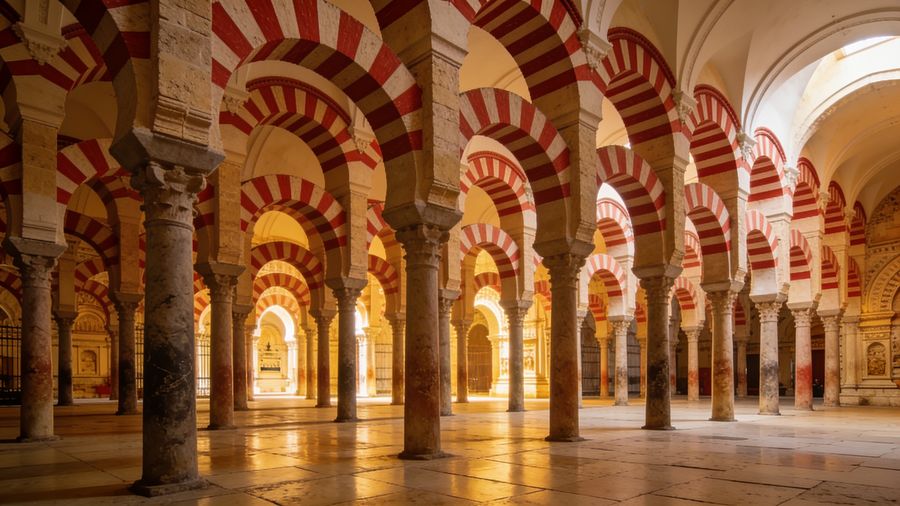
Córdoba is often squeezed into a day trip from Seville, but it deserves more. Its showpiece is the Mezquita, a former mosque with a forest of more than 800 red-and-white striped arches, which had a cathedral built right in the middle of it after the Christian reconquest. Walking in for the first time is one of those moments you don’t forget.
Outside the Mezquita, the old Jewish quarter (the Judería) is a maze of narrow streets, flower-filled courtyards and tiny squares. The Roman bridge across the Guadalquivir River is best at sunset, when the light hits the old city walls. If you visit in early May, the Festival de los Patios opens dozens of private courtyards to the public, each one smothered in geraniums and competing for prizes.
Córdoba sits on the high-speed line between Madrid and Seville, about 45 minutes from Seville. Stay the night if you can. Once the day-trippers leave, the old town gets beautifully quiet.
Toledo
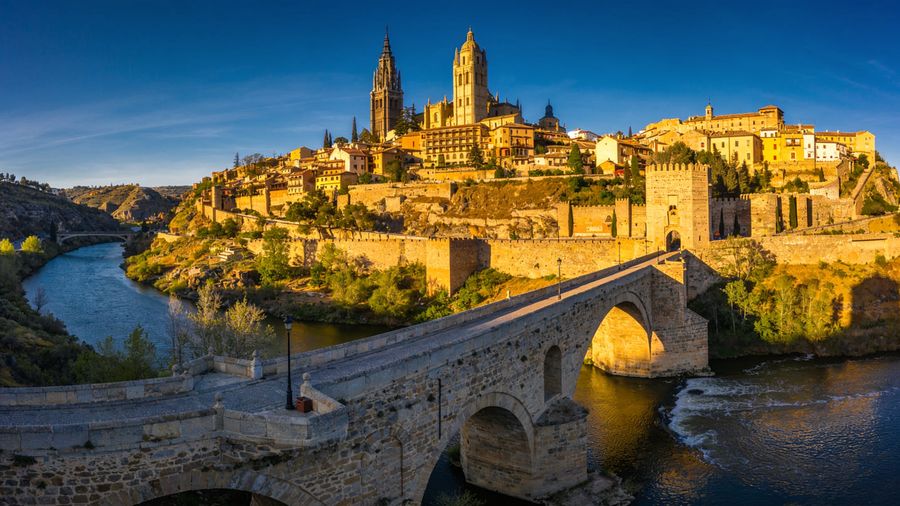
Toledo is technically a day trip from Madrid, but it’s different enough to earn its own spot. The whole old city sits on a rocky hill wrapped in a bend of the Tagus River, and it’s on the UNESCO World Heritage list as a place where Christian, Muslim and Jewish communities lived side by side for centuries. You can see that history in its churches, synagogues and former mosques, all within a few minutes’ walk of each other.
Highlights include the enormous Gothic cathedral, the Synagogue of Santa María la Blanca and a collection of works by El Greco, who lived and painted here. The city is also famous for marzipan and for its long history of sword-making, so expect plenty of both in the shops.
The fast train from Madrid takes just over half an hour. Like Córdoba, it’s best experienced overnight, so you can wander the lit-up streets after the tour groups have gone home.
Bilbao

Bilbao on Spain’s Atlantic coast is almost criminally underrated. It was a gritty industrial port until the Guggenheim Museum opened in 1997. Frank Gehry’s titanium-clad building transformed the city’s image so completely that urban planners now talk about the Bilbao effect.
Beyond the museum, the Casco Viejo (old town) is packed with pintxos bars, especially around the arcaded Plaza Nueva. The climate is much more like northern Europe, with green hills, mountain trails and a lot more rain than the south. Around 35 km away, San Juan de Gaztelugatxe is a hermitage perched on a tiny island reached by a winding stone causeway. In peak season you need to book a free entry slot.
Fancy some of the world’s oldest art? The famous painted cave of Altamira is near Santillana del Mar in neighbouring Cantabria, roughly an hour and a half’s drive west. The original cave is closed to protect the paintings, but the museum’s replica cave is remarkably faithful.
San Sebastián

San Sebastián (Donostia in Basque) sits on the Bay of Biscay, about an hour and a half from Bilbao by bus. It’s a seaside resort with serious food credentials and one of the highest concentrations of Michelin stars on the planet. You don’t need a fine-dining budget to eat well, though.
The real fun is pintxos. These are bite-sized snacks lined up along the bar in the Parte Vieja (old town), and the local move is to have one pintxo and a small drink in each bar before moving to the next. Try a gilda, a skewer of anchovy, olive and pickled pepper that was invented here, and wash it down with txakoli, a slightly fizzy local white wine poured from a height.
Between meals, swim at La Concha, one of the prettiest city beaches in Europe, or walk up Monte Urgull or take the old funicular up Monte Igueldo for the view over the bay. Summers here are warm rather than scorching.
Asturias and the Picos de Europa
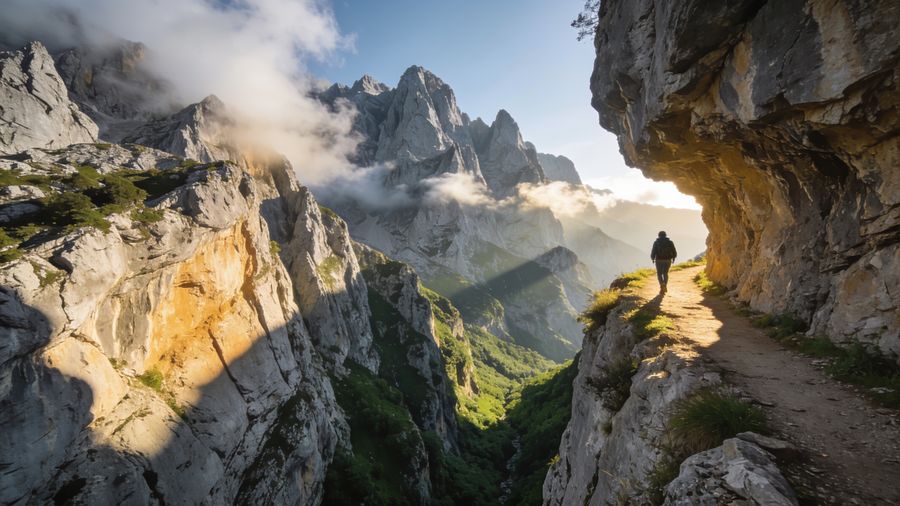
Spain’s north coast is a different country from the postcards. Asturias is so green it gets compared to Ireland, with dramatic cliffs, fishing villages and the jagged limestone peaks of the Picos de Europa National Park just inland.
Hikers should put the Cares Gorge trail on the list. It’s a path carved into the side of a deep canyon, about 12 km each way, with sheer drops and incredible views. The glacial lakes of Covadonga are another highlight, though access by car is restricted in busy periods, so check the bus arrangements before you go.
The food is hearty and perfect for the cooler climate. Fabada is a rich bean stew with chorizo and black pudding, and the local cider is poured from above the head into a glass held at waist height to aerate it. Cider houses (sidrerías) in Oviedo and Gijón are the place to try it. You’ll want a hire car to make the most of this region.
Málaga

Málaga is the gateway to the Costa del Sol, and it has shaken off its old reputation as somewhere you just land and leave. The city now has an excellent museum scene, including the Museo Picasso in the town where the artist was born, plus a lively street-art district called Soho.
History lovers can climb up through the Alcazaba, an 11th-century Moorish fortress, to the Gibralfaro castle above it for views across the port. The beaches are a short walk from the centre, and the weather is mild all year, which makes it a great winter escape. Málaga is also a smart base for day trips. The Caminito del Rey, a boardwalk pinned to the walls of a deep gorge, is about an hour away (tickets need booking ahead), and Ronda, Granada and the white villages of Andalusia are all within reach.
Málaga’s airport has more international connections than most Spanish cities outside Madrid and Barcelona, so it’s often an easy entry point.
Cádiz
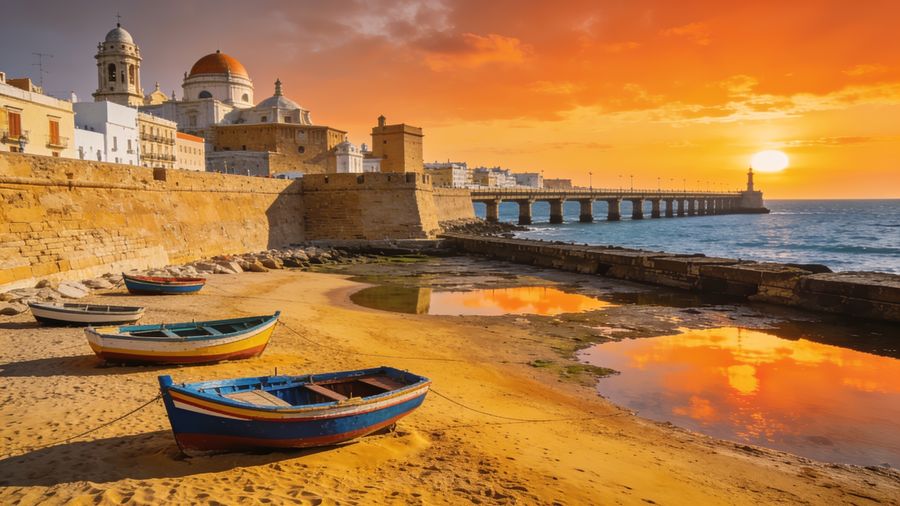
Cádiz is one of the oldest continuously inhabited cities in Western Europe, founded by the Phoenicians around 3,000 years ago. It sits on a narrow spit of land almost entirely surrounded by the Atlantic, so the sea is never more than a few minutes’ walk away.
The old town is a compact grid of narrow streets, watchtowers and little squares, and La Caleta beach sits right next to it, framed by two old forts. The seafood is superb and cheap. Order tortillitas de camarones (crispy shrimp fritters) and anything fried at the Mercado Central. In February, Cádiz throws one of the best Carnivals in Spain, famous for its satirical singing groups who roast politicians in rhyme.
It also makes a great base for the Sherry Triangle. Jerez de la Frontera, home of sherry and Andalusian horse shows, is only about 40 minutes away by train. If you liked Seville but want something smaller and breezier, this is your spot.
The Balearic Islands

The Balearic Islands (Mallorca, Menorca, Ibiza and Formentera) are famous for parties, but each one has its own personality, and they’re not all about clubbing.
Mallorca is the biggest and most varied. Palma has a stunning cathedral right on the waterfront, and the Serra de Tramuntana mountains along the west coast are UNESCO-listed, with hiking trails, hairpin roads and stone villages like Deià and Valldemossa. Menorca is calmer and more family-friendly, with turquoise coves (calas) that you reach on foot along the Camí de Cavalls coastal path.
Ibiza is the global capital of clubbing, with the big venues running roughly from May to October, but the north of the island is surprisingly quiet and rural. Formentera, a short ferry ride from Ibiza, has some of the clearest water in the Mediterranean. The islands get very busy in July and August, so June and September are the best balance of warm water and fewer crowds.
The Canary Islands

The Canary Islands sit in the Atlantic off the coast of Morocco, much closer to Africa than to mainland Spain. Thanks to that position they’re warm all year round, which makes them Europe’s favourite winter sunshine spot.
Tenerife is home to Teide National Park and Mount Teide, which at 3,715 m is the highest peak in Spain. A cable car takes you most of the way up, and you need a free permit (booked well in advance) to walk to the very summit. Lanzarote has black volcanic landscapes, the fire mountains of Timanfaya and the work of artist César Manrique, who shaped the island’s low-rise look. La Palma has some of the clearest night skies in the world and is famous for stargazing.
The islands were home to the Guanches, an indigenous people whose history you can explore in local museums. Each island has its own airport, and inter-island ferries and short flights make hopping easy.
When to Visit Spain
Timing makes a huge difference in Spain because the climate varies so much between regions.
Spring (April to June) is the best time for Andalusia. Seville, Granada and Córdoba are warm and sunny without being brutal, the orange blossom is out, and big festivals like Semana Santa and the Feria de Abril are on. Autumn (September to October) is similarly good, with warm sea temperatures and fewer crowds.
Summer (July and August) is peak season and coincides with Europe’s school holidays, so prices rise and beaches fill up. It’s also the hottest time of the year, with inland Andalusia regularly hitting 40°C or more. If you’re travelling over the Australian winter, head north to the Basque Country and Asturias, or stick to the coast and islands.
Winter (November to March) is quiet and cheap. The Canary Islands and Málaga stay mild, cities are uncrowded, and the Sierra Nevada near Granada has skiing.
Getting Around Spain
Spain is one of the easiest countries in Europe to travel around without a car. Its high-speed rail network is one of the largest in the world, and competition between the state operator Renfe (AVE trains) and newer low-cost operators Iryo and Ouigo has pushed fares down on routes like Madrid to Barcelona, Valencia, Seville and Málaga. Book a few weeks ahead for the best prices.
Where the fast trains don’t go, ALSA runs comfortable intercity buses, and they’re often the quickest way between Bilbao and San Sebastián or around Andalusia’s smaller towns. For northern Spain, the white villages and the Picos de Europa, a hire car gives you the most freedom. Most car-hire companies will ask for an International Driving Permit alongside your Australian licence, so grab one before you leave.
Australians can generally spend up to 90 days in any 180-day period in the Schengen Area without a visa. Our guide to how long Australians can stay in Europe has the full details.
Sample Routes for Your First Trip
If you’re struggling to choose, here are two routes that work well on a first visit.
Ten days in Andalusia: Fly into Málaga and spend two nights there, then two nights in Granada for the Alhambra, one night in Córdoba, three nights in Seville and two nights in Cádiz. The legs are short (mostly one to three hours by bus or train) and you get Moorish palaces, flamenco, tapas and beaches in one loop.
Ten days in the north: Start in Bilbao for two nights, then three nights in San Sebastián for the food, before driving west through Cantabria (Santillana del Mar and the Altamira museum) to Asturias for three nights in the Picos de Europa and a night in Oviedo. Finish with a fast train back to Madrid.
With three weeks, combine either route with Valencia or a few days in the Balearics. For even quieter corners, check out our guide to hidden gems in Spain.
Staying Connected in Spain Without Roaming Fees
You’ll lean on your phone a lot in Spain: booking Alhambra tickets, checking train platforms, translating menus and finding your way through tangled old towns. Public Wi-Fi is around, but it’s patchy and not always secure, and roaming with an Australian telco can get expensive fast.
A Spain travel eSIM is the easier option. You install it before you fly, and it connects to a local network as soon as you land. If Spain is part of a bigger trip, our Europe travel eSIM covers 40 countries on one plan, starting at A$9 ($6 USD), with 5GB for 30 days at A$21 ($14 USD). That’s plenty for maps, train apps and a steady stream of pintxos photos.
There’s So Much More to Spain Than Madrid and Barcelona
I’ll say it again: Madrid and Barcelona are amazing, and well worth your time. But Spain’s real magic is in its variety. In a single trip you can watch flamenco in a Granada cave, eat your way through the pintxos bars of San Sebastián, hike a gorge in Asturias and finish on a volcanic beach in the Canaries.
Pick a region, give it a bit more time than you think you need, and let the long lunches and late dinners set the pace. You’ll be planning your second trip before the first one’s over. And next time, maybe you’ll finally make it to the islands.
FAQs
Yes. Cities like Seville, Granada, Valencia and Bilbao have world-class sights of their own, and they tend to be cheaper, more walkable and less crowded than Madrid or Barcelona. Many travellers find the smaller cities are where Spain really clicks.
It depends on what you want. Andalusia is the pick for Moorish history, flamenco and sunshine. The Basque Country and Asturias are best for food, green landscapes and cooler summers. Valencia and Málaga suit people who want a city break with a beach attached, and the Balearic and Canary Islands are made for beach time and nightlife.
Very easy. Spain has one of the biggest high-speed rail networks in the world, with AVE, Iryo and Ouigo trains linking Madrid to Seville, Córdoba, Málaga, Valencia and more in a few hours. ALSA buses fill in the gaps, and a hire car is handy for northern Spain and small villages.
Spring (April to June) and autumn (September to October) are the sweet spots for most of the country. Southern cities like Seville and Córdoba can top 40°C in July and August, so summer is better spent in the north or by the coast. The Canary Islands are warm all year round.
Ten days is enough for a solid loop of Andalusia or a run along the north coast. Two to three weeks lets you combine regions, for example Andalusia plus Valencia or the Basque Country, without feeling rushed.
Travel eSIMs you may like:
Written by
Josh Warner
Co-founder of ZenSim, full-time banana bread lover.
Josh has been an engineer for the past 12+ years and in the telecommunications industry for the past six. A self proclaimed developer, designer, copywriter and occasional gym goer, if you have used a ZenSim website or app, it's likely Josh was the one who designed & built it.

Get amongst it
Join the community
We will reach out when we launch new products, about our sustainability projects, specials, new innovations or maybe even cool sh*t we think is inbox worthy.


